Wednesday, November 15, 2017

Modernation


MY STORY: This week I'll be taking a break from my Slow Series. It's been a pretty intense process writing out the series in addition to having a heavier load in school time around. Today I'll be giving an update on what I've been up in the weeks I've been sharing the Slow Series.

This past weekend my parents visited and it was nice to just hang out with them again. Before I moved to LA, I really didn't hang out with my friends too much and instead would go out with my parents during the weekends. We have similar interests (mainly eating) and enjoy each other's company. It was nice to revisit that but at the same time I enjoy my friends and lifestyle in LA.

This week 2 of my middle school friends are visiting and it's so exciting to see them again! I still have school and work so we don't have too much time together but I'm looking forward to catching up with them.

Lastly, I've just been busy with school work since there are a few projects with many parts due throughout the week. I've been getting closer to a few friends in school which makes the process a lot easier to endure. I've really been enjoying the presence of my friends and continuing to get to know them better. I'd love to hear something you've been enjoying lately!

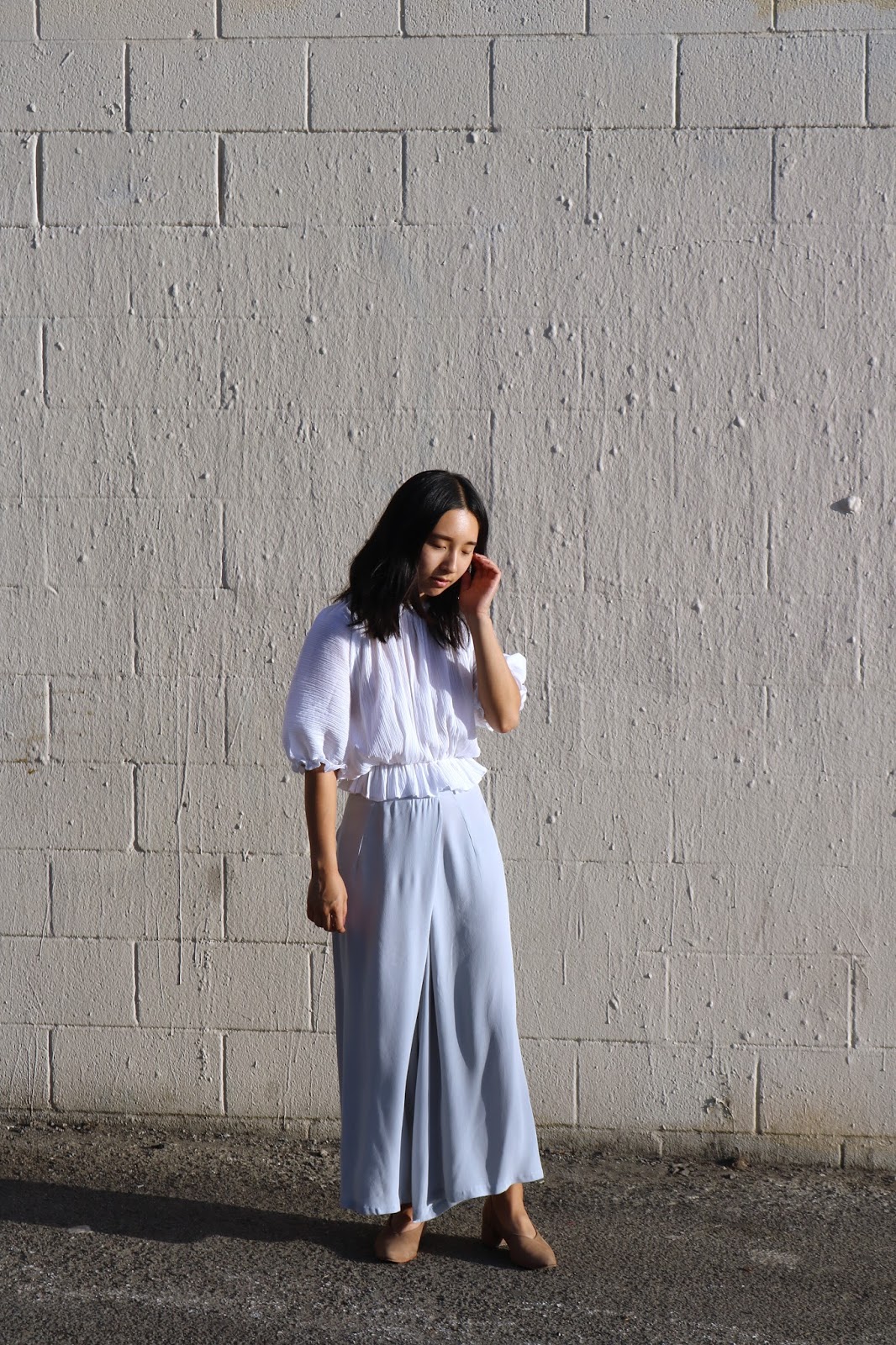
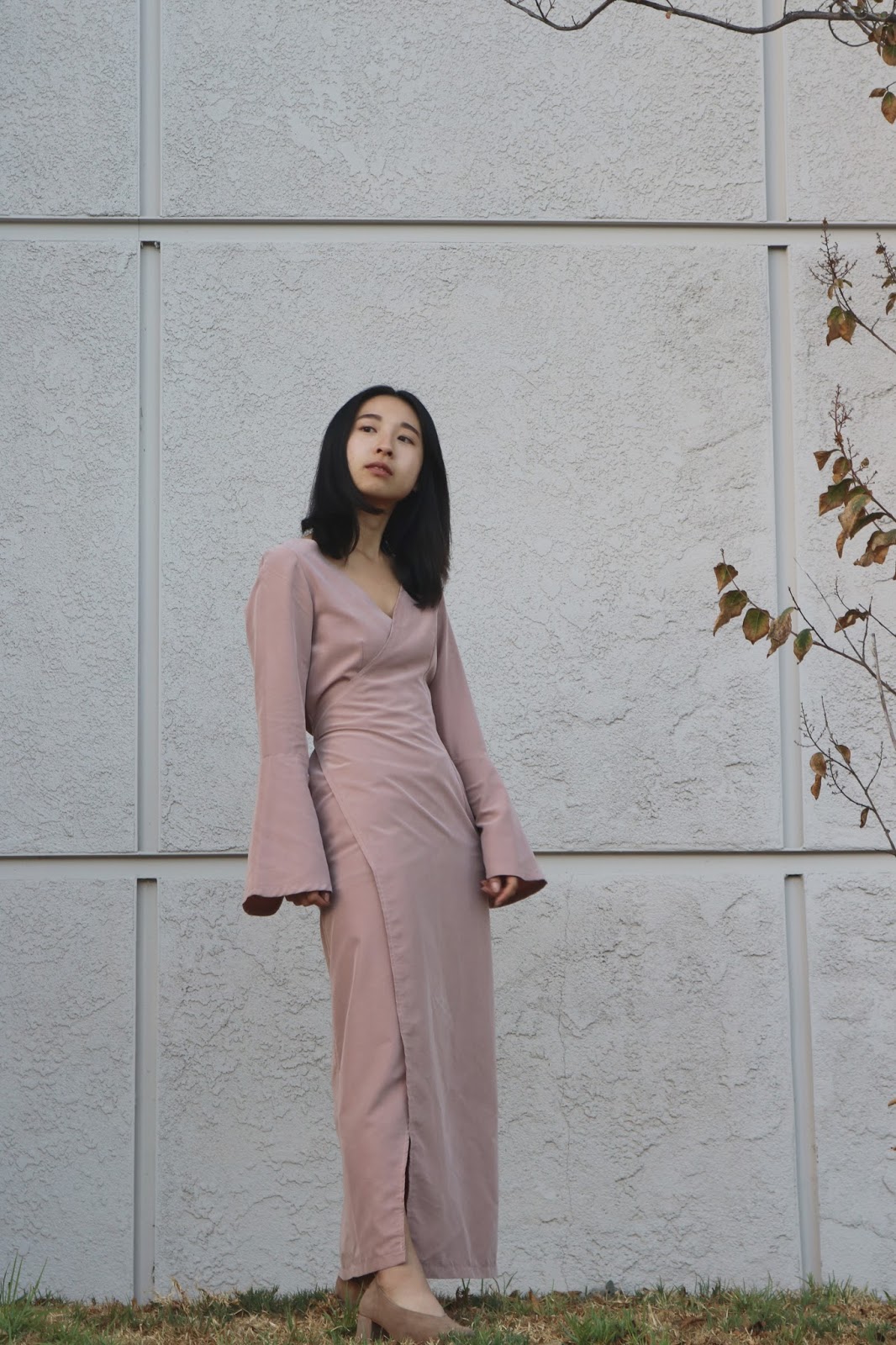
MODERNATION'S STORY: Dawn Oakes is the founder of Modernation, a women's clothing line that offers an alternative to fast fashion. This all started when Dawn worked in the interior design industry and was introduced to sustainability in building materials, water efficiency, and environmental quality. After learning this, she felt that there was an opportunity to create while making a positive change. In her latest capsule collection, she offers 5 pieces that can be worn in several ways. They are all made in tencel which is a natural fabric that looks and feels luxurious. It takes a few months to create a collection and she focuses on neutral colors and a timeless design. I love the blush color of the Lyanna Dress and the way the tencel feels against the skin. 

Wednesday, November 8, 2017

Slow Series Part II ft. Tales of Anyday

Tales of Anyday Lu Shirt, Father's Daughter Jett Jeans in Biscuit, Nisolo Mariella Mule in Black

SLOW SERIES

-Part II-
Defining Slow Fashion.

       In my previous post, I explained the process of garment making and grazed on what slow fashion was. Today I'll be breaking down what slow fashion is from my perspective. Slow fashion is composed of two large umbrellas: ethics and sustainability.

       Ethically made clothing focuses on the people who contribute to the process of making garments. Clothing made ethically can entail various meanings and details. Here is a list of what I have seen brands share as to why their company is ethical.

- Workers are paid a fair wage. This means workers are being paid minimum wage or above. I have also encountered the term 'living wage' which is an amount above minimum wage that allows workers to live comfortably. 
- The work environment is safe. Often time places such as dye or wash houses use chemicals that are detrimental to the health of workers. Natural dyes made from vegetables are an alternative to harsh chemicals used traditionally. 
- Workers receive paid time off.
- Workers receive worker's compensation. Physical work such as sewing can lead to muscle injuries. For businesses, workers compensation is costly and therefore, not always offered.
- Workers are satisfied. A slower production schedule allows workers to take time to do their work accurately removing the pressure of constantly being pushed to work faster. 

       The sustainability aspect of a brand focuses on the durability of a garment through time. I created another list to break down the different parts that contribute to a lasting garment.

- Quality. A garment will last longer when it is stitched together a certain way. This is something new I learned from taking my sewing class. In sewing, there are different number of stitches per inch. The higher the number of stitches per inch, the longer a garment will last, which makes sense because it is more difficult to rip out 10 small stitches within an inch compared to 5 large stitches within the same length (from experience). Also, the higher the number of stitches per inch, the longer it takes to sew. When I learned about this, I became more aware of the differentiating factors of slow and fast fashion. This is also a good way to tell whether a garment will last or not.
- Design. When garments are designed to last, they aren't about the latest trend but instead, have a timeless style.
- Eco-conscious. This can be taken in several ways. Zero waste is something that is always good to strive for even though in reality it is not always possible. Cutting fabric to maximize the amount of garments that will be produced, maximizing the amount of paper used when creating patterns or designs, and using reusing bags for packaging are great ways to decrease waste. Another idea would be to purchase fabrics and materials locally as to lower the carbon footprint in modes of delivery.
-Fabric. I feel that there is a wealth of information to be shared about fabrics which is why I will be going more in depth about it in the following Slow Series next Wednesday.

       To sum this up, it is not to say that all companies that claim they are ethical or sustainable comply with all these points. I applaud any company striving towards even 1 of these points because it is already taking a large step away from fast fashion. I hope this information was insightful and helped build your knowledge on slow fashion. I am still learning and would love to hear any of your thoughts/comments!

TALES OF ANYDAY'S STORY: Sintija is the founder of Tales of Anyday which offers beautiful sustainable and ethical women's wear. She is originally from Riga, Latvia but is now based in Copenhagen, Denmark. She has a masters in Sustainability in Fashion and dedicates her work to sustainability through production, materials, and design. Sintija believes that design can be sustainable when it is timeless and made of high quality fabric and construction. In making her clothes, she believes that production methods should be under fair working conditions. She also designs and develops environmentally friendly textiles. She tends to work with fabrics that are natural such as linen, organic cotton, and lyocell. I love that her pieces are made with high quality fabric and construction and that her mission is focused on sustainability.

Wednesday, November 1, 2017

Slow Series Part I ft. Annika Deboer

Annika Deboer Lara Top and Drifter Pants, Zou Xou Belu Pump in Sand Suede

SLOW SERIES

-Part I-
The Process of Making a Garment.

        Today my story will be a bit different. I recently took a walk to the mall and went into several stores only to be disappointed in the fabric and quality of the clothes offered. Just prior to this visit, my friend Jacci, who doesn't work in the fashion industry, asked for a few slow fashion brands she could shop. From these two incidences, it sparked in me that I wanted to share this information. Thinking about it, if I wasn't studying and working in fashion, I probably wouldn't know as much about slow fashion as I do now. I decided to write up the knowledge that I have, but during the process I found that there were several areas I wanted to touch upon that would be much too long for one post. Because of this, I will be creating a series on slow fashion touching on different topics each week. I also asked on Instagram if anyone had any questions about slow fashion and will be answering them either today or in a future post.

        To begin, I thought it would be good to lay down the foundation of the process of making clothes. Before I entered the fashion industry, I really didn’t know how clothes were made. I’d taken a few sewing classes prior and made a few dresses, but making clothes for consumers is a whole different process. The process that I will explain is from my perspective of working in a small business where each person wears many hats, meaning we typically do more than one appointed job. Also since I only recently started studying fashion design, there are still many areas that are unfamiliar to me but I will share as much as I know.

        To start creating a garment, designers research what to create. This process of researching may include inspirational activities such as traveling, viewing art, listening to music, studying what people are wearing in public, meeting new people, combing through thrift stores, etc. After this, they sketch pieces they want to create. This sketch is initially done in pencil and then drawn on the computer using Adobe Illustrator. There will be a period of time where the designs are thought over to make sure they make sense and that they are catered to the specific audience of the brand. When necessary, edits will be made to the computer drawings and from my experience, it takes several weeks for pieces to be finalized.

        After the design process, the sketches are handed over to the pattern maker. They are the people who create a paper version of what clothes would be if they were completely unstitched and flattened. Accurate measurements are very important for the fit of the garment. They also need to make specific marks on each pattern piece in order to communicate well with the sewer. A sample piece will then be sewn and fitted on a model to ensure that it fits well and looks the way it was designed to.

        I am not as familiar with grading and marking but from what I understand, a grader creates a range of sizes from the sample size paper pattern handed over from the pattern maker. A marker arranges the pattern pieces in a way that maximizes the available fabric before cutting. The marker, which is similar to a stencil, is given to the cutter to cut the fabric along the lines of the marker. The cut out pieces are then given to the sewers to be made into actual garments.

        Depending on the fabric, certain garments may need to be washed to soften the material or in the case of jeans, need to go through a specific wash treatment. After, trims such as buttons and labels are added onto the garment. Lastly, they are inspected, snipped of any loose threads, and packaged to be shipped.

        After sharing this process, I feel that I can better explain to you what fast and slow fashion are. Fast fashion is creating clothes in the fastest manner possible in order to reach the consumer with the latest trends on the runway. This would mean that each person in the process above would do their work at an expedited rate that is unnatural for humans. It is important to respect each person's creative gift in this process, which also means accepting that it takes time to create. This brings me to slow fashion. Slow fashion is taking the time to go through this creative process which often accompanies using environmentally friendly fabrics and processes to create clothes. To avoid making this post too long, I will expand on the latter in the next part of this series.

ANNIKA DEBOER'S STORY: Annika, inspired by mindful consumption and long-lasting garments, started her brand of ethical women's wear in 2017. She creates small collections and the construction of her clothing is slow in order to focus on the quality of the pieces she creates and to reduce excess. All of her pieces are made to order and cut and sewn in New Zealand. She hopes that in the time awaiting a garment, her customers will appreciate the craftsmanship it takes to create garments and treasure it when it arrives.